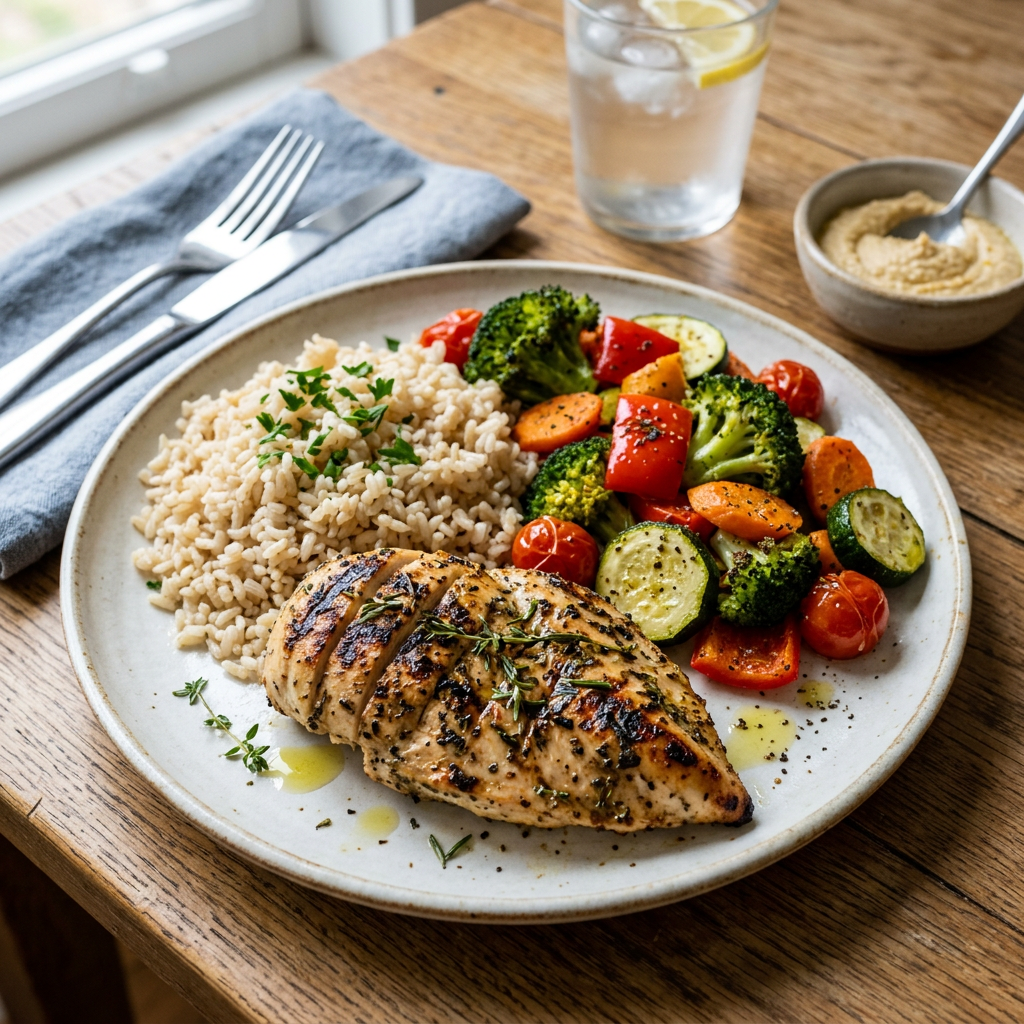

If you are asking why am I not losing fat, even though you train hard and your meals look clean, start here: you are probably not failing. You are stuck on one specific variable, and you have not found it yet.
A stall is rarely a willpower problem. It is almost always a system problem. One lever is slightly off, and that single lever quietly holds the whole process in place while everything else looks right on paper. This article walks through the four most common levers, so you can stop guessing and fix the one that is actually yours.
Energy balance still runs the show. To lose fat, you have to take in less energy than you burn over time. That part has not changed. Where people get tripped up is treating it like clean math, as if the body were a spreadsheet that subtracts calories on schedule.
It does not work that cleanly. Your appetite, your stress load, how well you fuel your training, and how consistent you are across a full week all bend that equation. “Doing everything right” usually means doing most things right while one hidden factor cancels the deficit you think you are in. So the answer is not to grind harder or eat even less. The answer is to find the lever that is off and adjust that one thing.
After enough years of coaching people through this exact wall, the same patterns show up again and again. Most stalls trace back to one of four blockers. The IGNIT3 Fat Loss Quiz sorts you into exactly these four, but it helps to understand each one first so your result actually makes sense.

What it looks like: The food is genuinely good quality. Whole foods, home cooking, nothing obviously off. But hunger runs high, portions drift up, and the extra bites, the generous pours, and the “I earned it” snacks add up without ever feeling like cheating.
Why it stalls fat loss: A deficit is small by nature. It does not take much to erase it. A few hundred extra calories a day, spread across honest, healthy food, is enough to flatten the scale completely. Nothing looks wrong, which is exactly why it is so hard to spot from the inside.
What helps: Awareness beats restriction here. Anchoring meals around protein and fiber blunts the hunger that drives the drift, and a little structure (consistent meals, a rough sense of portions) closes the gap without turning eating into a math test. This is the blocker where a second set of eyes pays off fastest, which is what our VIP Nutrition Coaching is built for.
What it looks like: The plan is solid, but life is loud. Long hours, short sleep, a full plate at home or work. You are doing the right things and the body still will not let go of the fat.
Why it stalls fat loss: Chronic stress and poor sleep work against you on every front. They push appetite up, especially for fast, dense food, they dig a recovery hole that makes training feel worse, and they drive water retention that hides real fat loss on the scale for weeks. You can be in a true deficit and see nothing move, which is demoralizing and often leads people to cut harder, which only adds stress.
What helps: Sleep is the highest-leverage move most stressed people are ignoring. Protect it. Then look at total load: training should restore you on hard weeks, not bury you. Sometimes the fastest way to start losing fat again is to lower the pressure, not raise the effort.

What it looks like: This is the counterintuitive one. You are already eating very little, training hard and often, and still completely stuck. The instinct is to eat even less, which makes it worse.
Why it stalls fat loss: When fuel is too low for the work you are demanding, things quietly break down. Recovery suffers, daily movement drops without you noticing, training quality falls, and adherence gets fragile because you are running on empty. A body under that much pressure protects itself, and progress flatlines. Eating less is not the answer when you are already under-fueling.
What helps: Eat enough to actually train and recover, and match your training volume to what your body can absorb. Often that means a reset: bring food back up to a sane level, pull back the excess volume, and let the system stabilize before pushing again. It feels backwards, and it works.

What it looks like: Monday through Friday is dialed in. Then the weekend, the work trip, the rough day, or the social plan undoes it. You are not lazy. You are starting over constantly, and every restart costs you.
Why it stalls fat loss: Fat loss is decided by the weekly average, not the best day. Five sharp days followed by two loose ones can pull your week right back to maintenance, even when every individual perfect day looks like proof you are doing it right. The math runs on the whole week, so the whole week has to hold.
What helps: A sustainable plan you follow most of the time beats a perfect plan you follow half the time. Build something that survives weekends and real life, leave room for the things you are not willing to give up, and aim for consistent rather than flawless. Consistency is the skill that quietly outperforms intensity.
Here is the trap: most people cycle through all four of these on their own, one frustrating month at a time, never sure which one is actually theirs. That guessing is what turns a short stall into a lost year.
You can skip it. The Fat Loss Quiz asks the right questions and points you straight to which of the four blockers is stalling you, in a few minutes.
Once you know your blocker, you know your fix. And if you would rather not do it alone, our VIP Nutrition Coaching takes the guesswork off your plate entirely, building the plan around your blocker, your life, and your goals.

If you have been asking why am I not losing fat while doing everything right, the honest answer is usually this: you are not doing everything wrong, you are working against the wrong variable. Find that one lever, adjust it, and the scale starts moving again. The first step is naming it.